Why Telcos Still Invest in OTT Platforms: Strategy & Evolution (Part 1)
TV has been declared dead more times than anyone can count, yet for telcos it keeps proving its value. In a market where broadband speeds are converging and price competition is relentless, TV remains one of the strongest levers operators have to stand out, reduce churn, and stay central to the household experience.
This article is Part 1 of a three-part series based on a complete, more detailed whitepaper, The Telco TV Playbook.
In this first installment, we focus on the foundations: why telcos still invest in TV, who telco TV operators are, who they serve, and how the market evolved through four major waves, from managed IPTV to modern OTT platforms and today’s replacement projects.
Why TV Still Matters for Telecom Operators

For more than twenty years, telcos have been a driving force behind how TV evolved, first through IPTV and later through OTT.
And even though global streaming giants have reshaped viewing habits and traditional pay TV is under pressure, TV is still a strategically important pillar for many operators around the world.
In fact, the case for a strong TV service is getting stronger. As connectivity becomes more commoditized and customer expectations keep rising, TV is one of the clearest ways for a telco to stay relevant in home entertainment and keep its place in the household experience.
Why Telcos Invest in Telco TV: Strategic Business Drivers
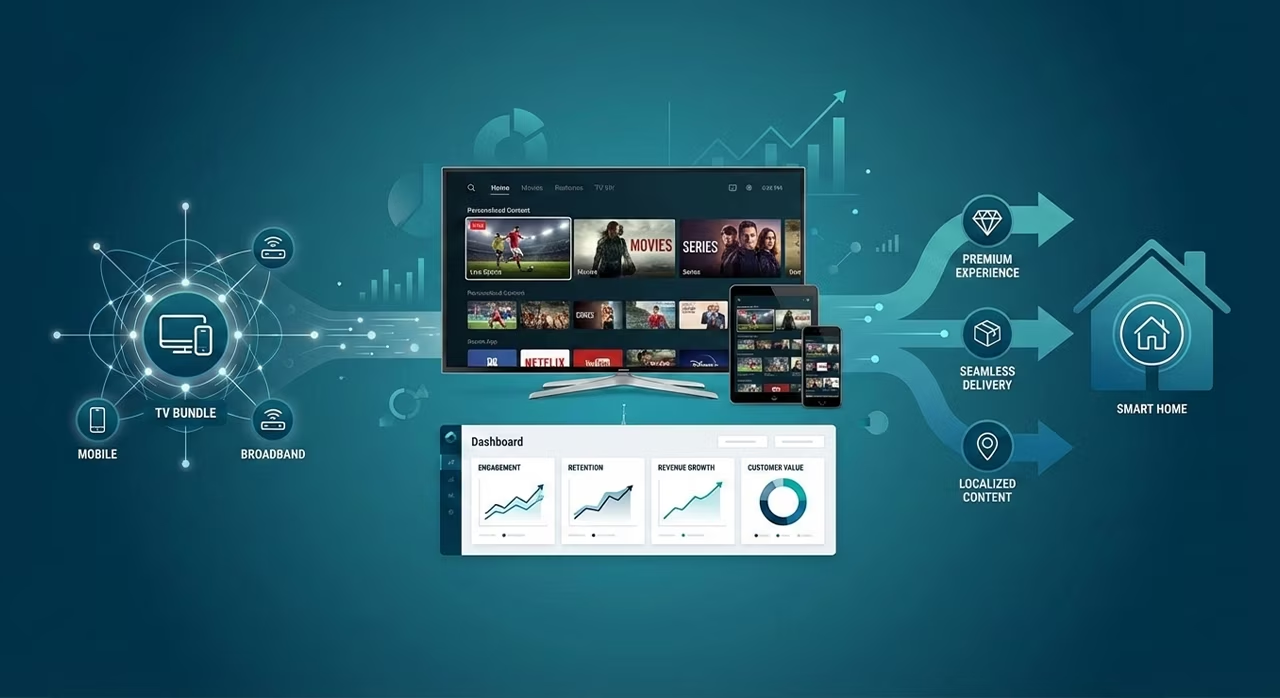
Broadband is Commoditized, but TV Differentiates
In many markets, fiber coverage keeps expanding, broadband speeds are starting to feel similar, and price competition is intense. For customers, home internet increasingly looks like a basic utility: necessary, but not always easy to tell apart from one provider to another.
That creates a very practical problem for operators: if connectivity alone feels interchangeable, what makes the offer stand out?
This is where TV keeps punching above its weight. A TV bundle that is content-rich, simple to use, and available across every screen can add a layer of value that pure broadband cannot. For many telcos, TV does not just sit next to broadband, it strengthens the broadband proposition itself and makes the overall home experience feel more complete.
A Proven Tool for Telco Churn Reduction and Customer Retention
TV also earns its place in the portfolio because it helps operators keep customers longer. Households with TV services tend to stay longer, upgrade to higher-speed broadband tiers, and switch providers less often. In markets where churn quickly eats revenue and pushes up acquisition costs, TV acts as an anchor inside the telco ecosystem.
The retention effect gets stronger as more services are bundled together, such as broadband, TV, mobile, and cloud services. This pattern has been validated across Europe, Asia, the Middle East, and the Americas, which is why even operators with thin margins still treat IPTV and OTT as a strategic lever for protecting the broadband base.
Streaming-Era Expectations Raise the Bar for Telco TV
Streaming changed what viewers consider normal. People expect TV to work instantly and smoothly, wherever they are and on whatever device they are using. That means telco TV needs to deliver:
- Immediate access across devices
- High-quality playback without buffering
- A smooth blend of live TV and on-demand video
- Strong discovery and recommendations
- A premium experience beyond the interface, including fast channel changes, intuitive navigation, and easy onboarding
When these expectations are not met, customers drift toward global streaming platforms or competing operators, and the telco gradually loses relevance in home entertainment. On the flip side, a modern and intuitive TV experience helps re-establish that relevance and keeps the customer relationship strong.
Telcos Have Advantages Global OTT Players Cannot Replicate
Even with tough competition, telcos have built-in strengths that pure OTT players cannot easily copy:
- Access network ownership gives more control over quality of service, latency, and reliability
- Existing billing relationships and brand trust make bundling simpler
- Local presence and content rights help deliver regional channels, local sports, and national packages that global platforms may not carry
- Physical distribution and customer support make TV easier to position as a turnkey household service
As the lines between connectivity and entertainment keep blurring, these advantages become even more valuable.
TV Is Becoming Central to the Connected Home
The living room is turning into the digital heart of the home. Smart TVs, streaming devices, gaming platforms, and connected home solutions increasingly converge on the main screen. At the same time, homes are getting more connected and more bandwidth-heavy.
For telcos, that creates a natural opening: connect TV with premium Wi-Fi, smart home systems, and converged mobile and fixed bundles. In that role, IPTV and OTT become both a revenue generator and a gateway into a broader digital services portfolio.
Telcos in the IPTV/OTT World
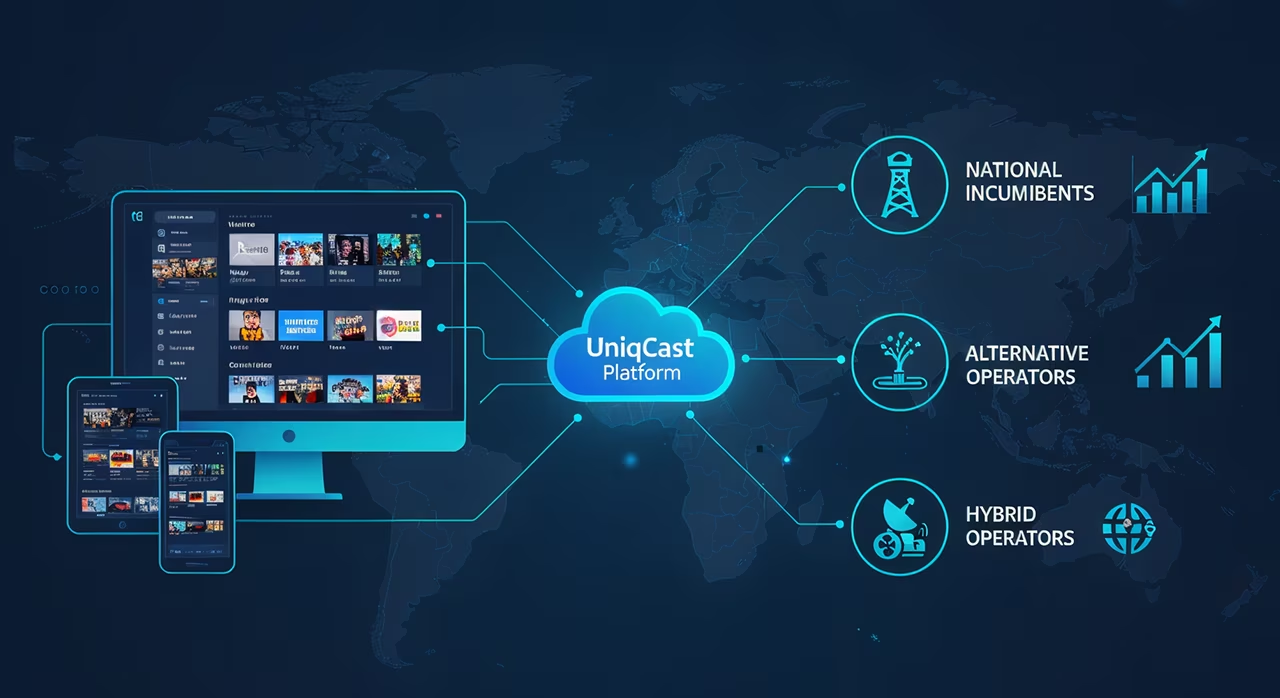
Telcos have played an outsized role in shaping how households consume TV, mainly because they already sit at the crossroads of broadband and entertainment. These are the companies that built, own, and operate the access infrastructure that brings connectivity into millions of homes, from copper to fiber to cable. That position makes them uniquely capable of delivering IPTV and OTT services at real scale, with the network, billing relationship, and customer base already in place.
Defining the Telco Segment in IPTV and OTT Delivery
In the context of TV services, telco typically means a fixed-network operator delivering broadband through one or more access technologies, including:
- xDSL (ADSL/VDSL): the original foundation for many early IPTV launches
- FTTH/FTTB (Fiber to the Home/Building): now the dominant future-proof approach for high-performance TV and streaming experiences
- HFC / cable networks: historically cable operators, but increasingly converged telco–cable entities
- Hybrid operators (fiber plus DVB-T/S/C): operators that still deliver broadcast TV through alternative networks alongside broadband services
The Three Most Common Telco Player Types
Even though every market has its own quirks, most telcos offering TV fall into three familiar buckets.
1) National Incumbents
These are the former state-owned, dominant operators that built and managed the original telephone networks. Globally, examples include Orange, Deutsche Telekom, Türk Telekom, Etisalat, STC, NTT, KT, Claro, Dialog, Azerconnect, and many others. In practice, almost all incumbents either run IPTV today or have already migrated toward app-based OTT TV models.
2) Alternative Operators and Challengers (altnets)
In many markets, growth and competition are increasingly driven by challengers, often regional or nationwide altnets investing heavily in fiber to capture broadband share. These players commonly launch IPTV or OTT early in their expansion because TV makes customers stickier and helps raise ARPU, especially when the broadband offer itself is hard to differentiate.
3) Converged Operators (Fixed Plus Mobile)
A large portion of telcos combine fixed broadband with mobile services, which unlocks powerful quad-play bundles. In these businesses, TV often becomes the central entertainment layer around which broadband and mobile are packaged, promoted, and retained.
Key Customer Segments for Telco TV Services
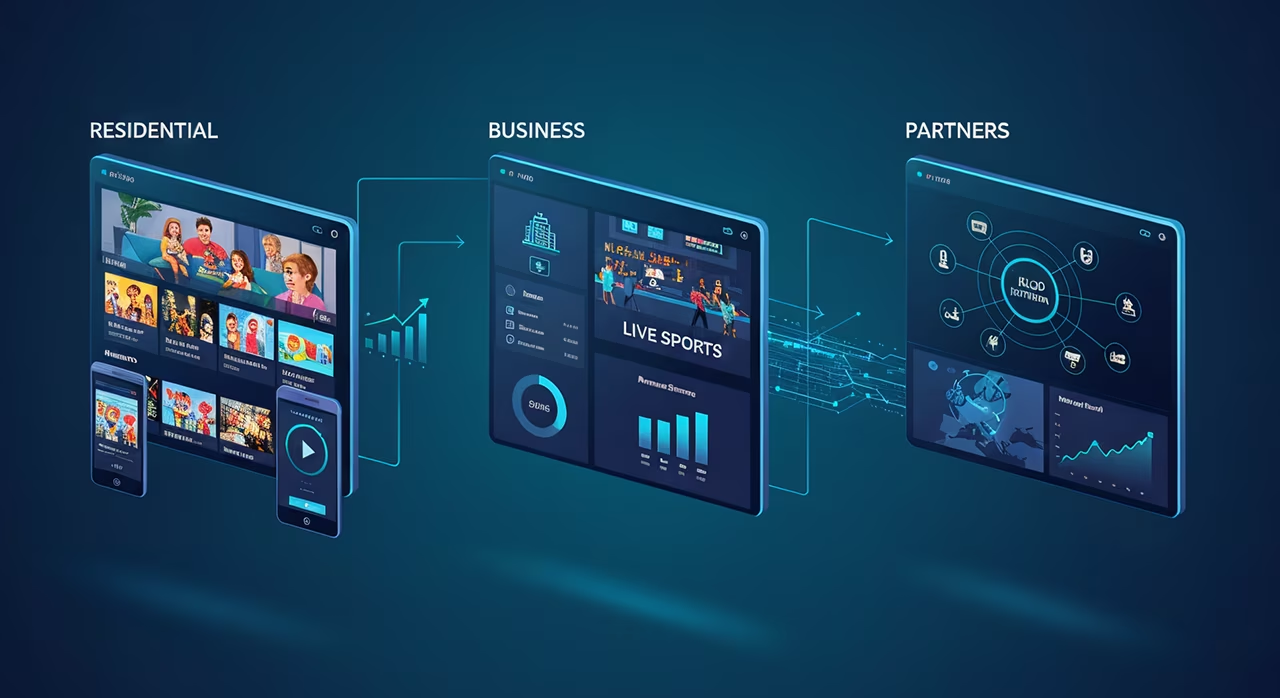
Telcos with fixed networks rarely build TV services for just one audience. In practice, they serve a mix of customer segments, each with different expectations and viewing habits. Getting those segments right matters, because the IPTV and OTT product, packaging, and even device strategy should be shaped around what these audiences actually value.
Residential Households: The Core Audience
For most telcos, households are the main volume driver. These customers typically buy broadband + TV bundles and expect the service to cover both everyday viewing and big family moments.
What that usually means in real terms:
- A reliable live TV lineup that includes national and local channels
- An on-demand catalog with movies and series
- Multiscreen access across mobile phones, tablets, set-top boxes, and smart TVs
- Local-language content and programming that feels culturally relevant
- Sports, often the key reason people upgrade to premium packs
- Kids content that supports family viewing and offers safer, curated options
Families, in particular, tend to remain loyal TV users and are less likely to rely only on standalone streaming subscriptions.
Business and Enterprise: Fewer Customers, Bigger Accounts
Business customers are smaller in number, but they can be highly valuable because they often come with longer contracts, larger deployments, and opportunities for managed services.
Common examples include:
- Hospitality and bulk deployments such as hotels, hospitals, apartments, campuses, and industrial areas, which often require bulk TV services and may request customized VOD catalogs
- Bars, cafes, and restaurants that primarily depend on live sports packages to attract customers
- Corporate offices that use TV in waiting areas and for internal communications
For telcos, this segment is attractive because it opens additional revenue streams beyond residential subscriptions, especially when TV is packaged as part of a broader managed service offer.
Wholesale Partners: Extending OTT Platforms for Telcos
Many telcos also extend their IPTV and OTT platforms to partners that do not want to build and operate a full TV stack themselves. In these cases, the telco becomes a platform provider, supplying TV as a service to smaller players.
Typical wholesale and white-label partners include:
- Regional ISPs
- Virtual operators such as MVNOs
- Real estate developments or campus networks
This model can extend the telco’s reach beyond its direct retail footprint, turning a TV platform into an asset that scales through partnerships, not just through broadband lines.
Global Market Size and Regional Outlook
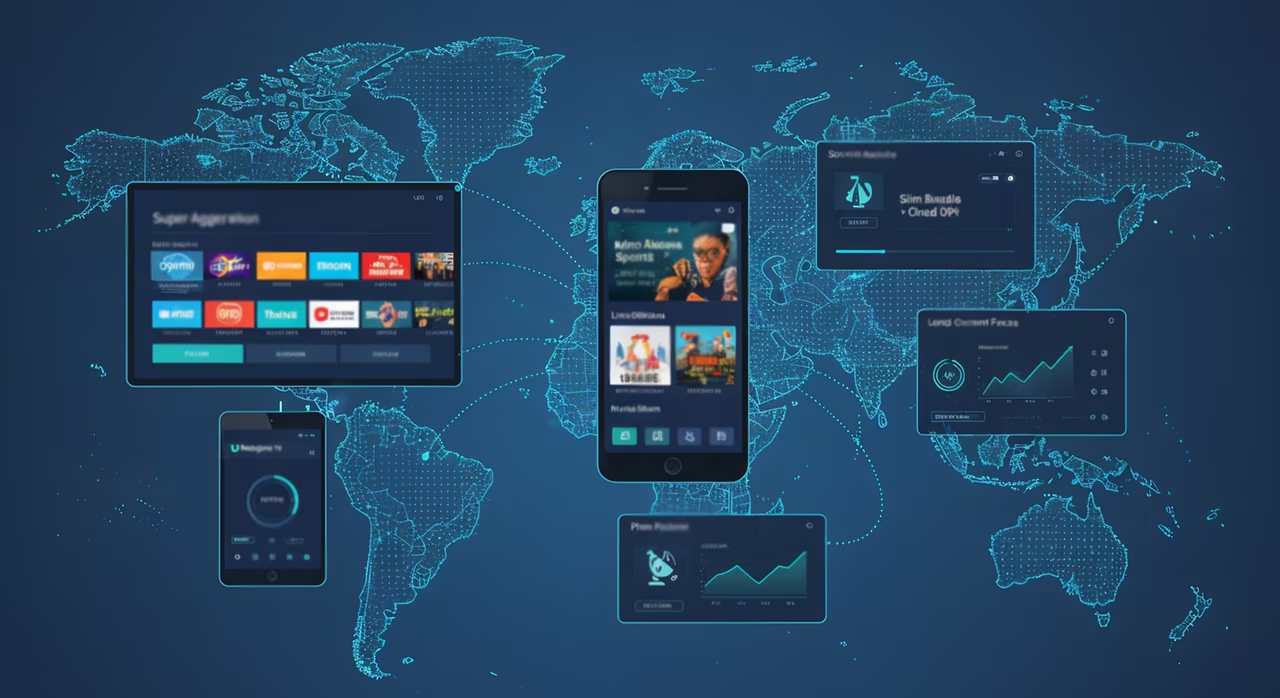
Telco-operated TV remains one of the biggest forces in the IPTV and OTT landscape. Fixed-network telcos are still the largest single category of IPTV and OTT operators globally, with tens of millions of active IPTV households and hundreds of millions of subscribers consuming app-based OTT TV services bundled through telcos.
What that looks like in practice varies by region, because network maturity, device adoption, content habits, and demographics all shape the kind of TV product operators need to win.
Europe
Europe continues to be one of the strongest IPTV regions in the world, helped by early operator adoption in markets like France, the Nordics, and Central and Eastern Europe. As fiber penetration rises, operators increasingly differentiate with richer TV propositions and broader app ecosystems, and many are leaning into super-aggregation and Android TV deployments.
Asia-Pacific
Asia-Pacific brings massive scale, especially in countries like China, South Korea, and Japan. Many operators here were early movers in IPTV and have since evolved toward full OTT ecosystems, with a strong emphasis on mobile-TV convergence driven by high smartphone penetration. The region also includes hybrid delivery environments that mix fiber and mobile with DVB-based networks, such as Dialog in Sri Lanka using DVB-S alongside mobile delivery.
A notable content dynamic is the rise of short-form, high-production micro-drama series, emerging from mobile-first consumption patterns in Asia-Pacific and now gaining traction in Western markets. For telcos, this creates a practical opportunity to curate, distribute, or even co-produce differentiated content that resonates with younger audiences, especially in mobile and app-based TV offers.
Middle East and North Africa
In MENA, rapid fiber rollouts are opening new headroom for IPTV growth. Local content, national sports, and Arabic programming remain major differentiators, and government-backed modernization initiatives often support digital TV development as part of broader infrastructure goals.
Sub-Saharan Africa
Sub-Saharan Africa has significant long-term upside as fiber networks expand, but the route to market often looks different from traditional IPTV. In many cases, operators leapfrog legacy IPTV approaches and move directly to app-based OTT delivered over broadband.
North America
North America is a hybrid competitive arena where telco IPTV operators coexist with strong cable players and powerful global streaming competitors. To stay competitive, telcos in this region often push slimmer bundle models, cloud DVR, and super-aggregation strategies that bring multiple services into a single experience.
Latin America
Latin America has historically been dominated by DTH and cable, but telcos are increasingly shifting customers toward IPTV and OTT apps. Sports rights and localized content are central battlegrounds, especially as operators work to modernize their TV stacks while meeting price sensitivity in many markets.
Island countries
Island markets come with their own operational reality: delivering high-quality, low-latency OTT across geographically separated islands can be complicated by submarine cables, limited inter-island fiber links, and smaller population centers. That makes CDN design and caching strategies especially important.
Many island telcos also prioritize mobile broadband due to infrastructure economics, which naturally pushes TV toward mobile apps and stronger mobile-TV convergence. At the same time, tourism and hospitality can be a major revenue driver, since hotels and resorts often demand premium TV services as part of the guest experience.
Regional demographics
Some regions face a particularly tricky balancing act, especially North America and Western Europe. These markets typically have a larger share of older households, where viewers prefer familiar experiences like channel grids, simple navigation, predictable flows, and reliable set-top-box access. Yet those same markets also need to satisfy younger, streaming-native audiences who expect modern OTT-style interfaces, fast discovery, big on-demand libraries, and tight integrations with global apps.
This dual-demographic reality is one reason North America and Europe are among the most demanding regions for building a unified telco TV product that can truly serve everyone in the household.
From IPTV to Modern OTT Platforms: The Evolution
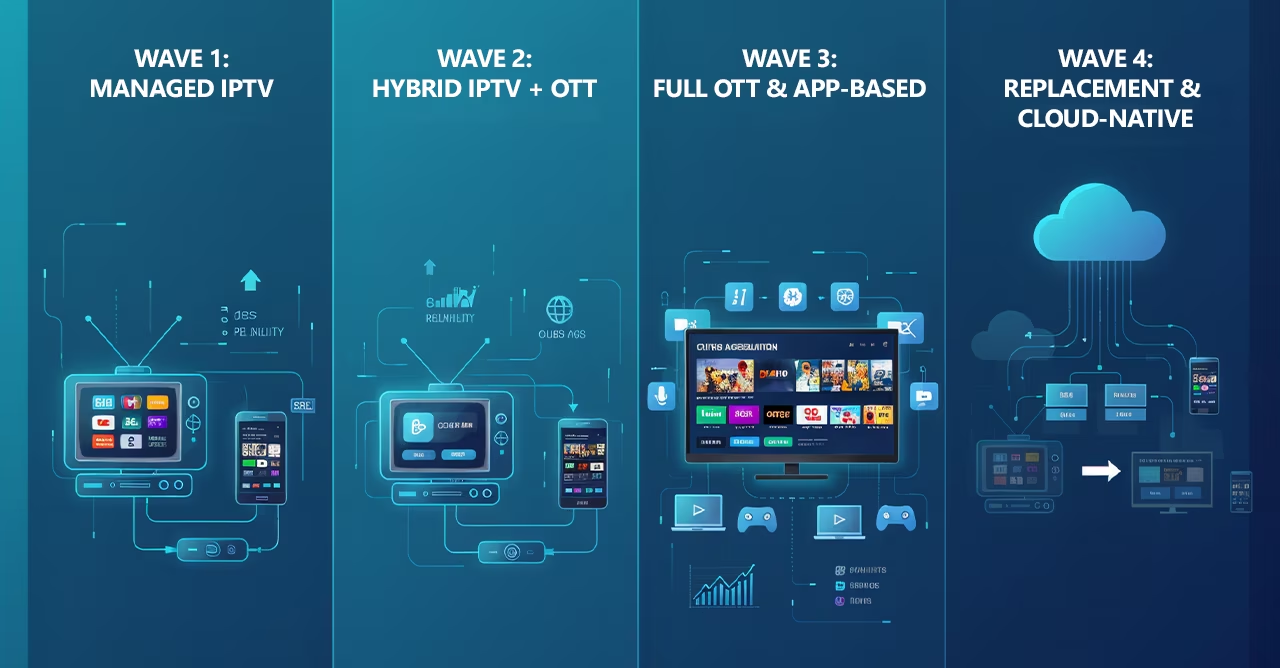
Telco TV did not arrive in one big leap. It evolved in clear phases, shaped by whatever viewers demanded at the time and whatever networks and devices could realistically support. Understanding these waves matters because many of today’s platform decisions, from device strategy to migration planning, are directly tied to how IPTV and OTT originally took root inside telcos.
Wave 1: Managed IPTV over DSL (Mid-2000s to Early 2010s)
The first wave kicked off when telcos needed a stronger way to defend their broadband base. Broadband adoption was accelerating, but competition and price pressure were rising. TV became a practical anchor for triple-play bundles, helping operators reduce churn, push broadband upgrades, and compete head-to-head with cable and satellite providers.
Technically, early IPTV was built for control and reliability:
- Multicast streaming over managed DSL (and in some cases early fiber)
- Set-top boxes with proprietary middleware
- Strict QoS controls as a major telco advantage
- Closed ecosystems with no third-party apps
- Core TV functionality such as EPG, VoD, timeshift, and limited PVR
The experience was consistent, but it had limits. HD was often a stretch on available speeds, and innovation moved slowly because the whole system was tightly integrated and hardware-dependent.
Still, the model proved itself. Markets such as France, Spain, Slovenia, South Korea, and Japan demonstrated that telcos could grow IPTV quickly when they invested early in broadband infrastructure.
Wave 2: Hybrid IPTV Plus OTT (Early 2010s to Late 2010s)
Then the smartphone changed the rules. Viewers stopped accepting TV as something confined to the living room. They expected video everywhere, on any device, and on-demand. At the same time, high-quality home Wi-Fi made streaming practical, and global OTT services like Netflix, YouTube, and Hulu became daily habits.
Telcos responded by layering OTT capabilities onto their IPTV foundations. The hallmark of this era was hybrid delivery: multicast IPTV for the set-top box, plus unicast adaptive bitrate streaming for multiscreen apps. That shift enabled:
- Multiscreen apps across iOS, Android, and web
- Hybrid set-top boxes that could handle both IPTV and OTT playback
- Catch-up, start-over, and cloud DVR
- Larger VoD catalogs
- Early integrations with major OTT apps
Hybrid was necessary, but it was not simple. Operators often had to run two parallel delivery systems, which added operational complexity and pushed costs upward.
The Beginning of Super-Aggregation
This hybrid period also planted the seed for what many operators are chasing today: super-aggregation. For the first time, telcos began integrating third-party streaming services directly into their environments, so subscribers could open a global app from inside the operator TV experience instead of jumping between devices and logins.
Wave 3: Full OTT and App-Based TV (Late 2010s to Today)
As fiber expanded and streaming habits became the default, many telcos started moving away from rigid IPTV-first models and leaned into OTT-first delivery. This wave reshaped telco TV from a controlled, set-top-box-centric service into a digital product designed to live across many screens.
A few technology and market shifts made that possible:
- FTTH expansion supporting high-quality ABR streaming
- Smart TV adoption reducing reliance on proprietary boxes
- Streaming devices such as Android TV, Apple TV, Roku, and Fire TV
- Cloud-based architectures enabling faster feature rollouts
- Open APIs and modular microservices replacing monolithic stacks
- Analytics and personalization becoming essential parts of TV UX
Modern telco OTT platforms in this wave typically aim to feel like one coherent service everywhere:
- App-based delivery across smart TVs, mobile, streaming sticks, web, and even gaming consoles
- Unified UX across screens
- Deeper integration with global and local streaming apps
- Voice search, recommendations, profiles, and watchlists
- Flexible monetization models, including SVOD, AVOD, FAST, and pay-per-view
- Cloud DVR and catch-up as standard features
There is also a strategic shift that comes with it. OTT makes it easier to serve customers beyond the operator’s physical footprint, enabling on-net and off-net models and opening new routes to growth.
This is where many telcos start acting less like traditional IPTV providers and more like digital entertainment hubs, bringing live TV, VoD, global apps, local services, and cross-service search into a single interface, so customers do not have to hunt across dozens of apps to find something to watch.
Wave 4: Platform Replacements (Late 2010s to Today)
For many operators, moving into a modern OTT model is not just an upgrade, it is a replacement. As first- and second-generation IPTV systems hit their limits, telcos increasingly choose to retire monolithic, hardware-dependent platforms and migrate to cloud-native or modular architectures designed for faster innovation and multiscreen delivery.
The main reasons are practical and hard to ignore:
- Legacy platforms struggle to deliver fast, personalized, multiscreen UX
- High OpEx to maintain, update, and integrate aging systems
- Slow time-to-market for new features and third-party app integrations
- Device constraints tied to proprietary set-top boxes
- Scalability limits under modern ABR traffic and cloud DVR demand
This replacement wave is also closely tied to super-aggregation goals. If an operator wants to unify content and apps into a modern TV experience, the underlying platform has to be flexible enough to keep up.
Examples referenced in the playbook show that this is a global pattern, with operators in Europe, Asia, and the Middle East completing or actively undergoing migrations, including Dialog, CityNet, HT Eronet, and Telecom Kosovo.
Because replacements are high-stakes projects, success depends on execution details, not just technology choice. Key considerations include:
- Minimizing customer disruption, often via phased rollout or parallel operation
- Data migration for catalogs, subscribers, entitlements, and billing
- Integration with existing BSS and OSS systems such as CRM, billing, and network management
- Aligning the device strategy, whether box swap, firmware upgrade, or a stronger BYOD and smart TV approach
- Cloud readiness for long-term scalability and operational efficiency
It is a major investment, but it is increasingly treated as the cost of staying competitive in a market where global platforms set the experience standard and customers can switch attention in a single click.
Wrap-Up: Why OTT Solutions Remain Strategic for Operators
TV is not a side product for telcos. It is one of the most effective ways to make broadband feel more valuable, keep customers longer, and stay relevant in a home entertainment world shaped by global streaming brands.
Across markets, the direction of travel is clear. Customer expectations are climbing, devices are multiplying, and TV experiences that feel slow, fragmented, or outdated quickly lose ground. That is why so many operators are moving beyond incremental upgrades and choosing full platform replacements, shifting toward modular, app-based, cloud-ready TV stacks that can keep pace with modern viewing behavior.
Part 2 of the Telco TV Playbook blog will build on this foundation and go deeper into what modernization actually involves in practice. We will look at the decisions that shape success, from platform architecture and device strategy to content aggregation and the operational realities of migration, so operators can modernize without disrupting customers or slowing the business.